
Resources > Blog > The Most Overlooked Step in Workplace Conflict Resolution? Reflection
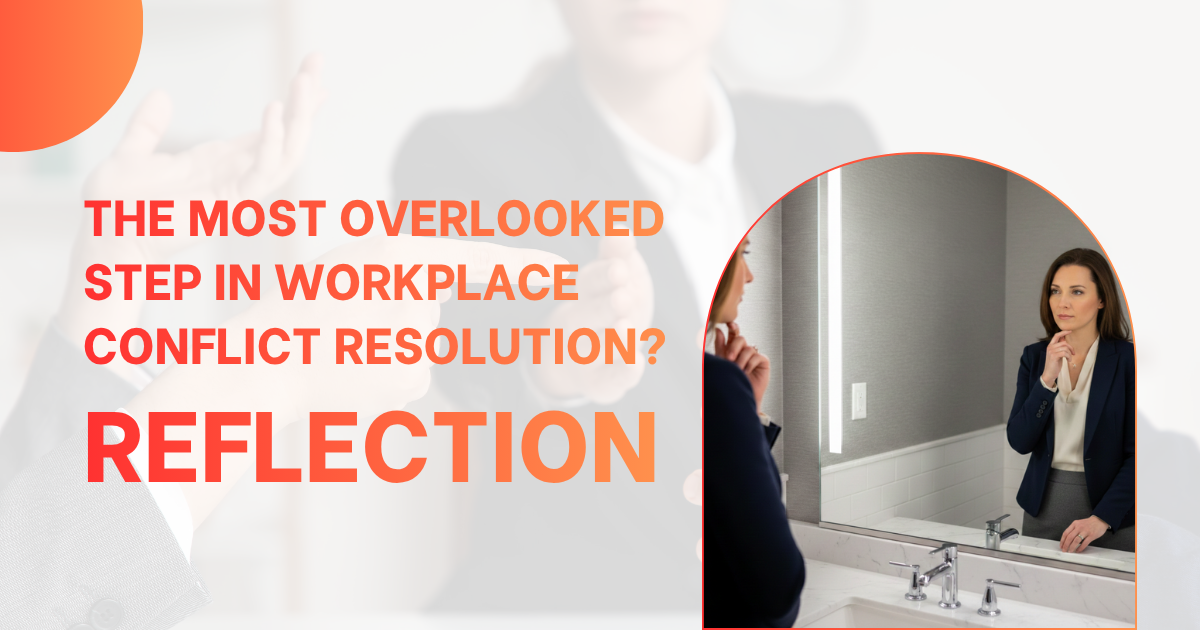
Mirror Mirror on the Wall – The Role of Reflection in Workplace Communication
In my respectful communication and conflict resolution workshops, I emphasize the critical role of reflection.
What do I mean by “reflection”?
That depends on where you are in the process of communicating about or through a specific issue.
Let’s go through a typical “conflict” conversation.
- Something happens in the workplace (or at home!) and you become triggered. Someone makes a sarcastic comment, someone sends an offensive email – you know what I’m talking about because we’ve all been there.
- At this point, it is critical to pause and retreat, instead of reacting in a hasty or emotional manner.
- The only way to do this is to know when you are triggered. The only way to know this is to reflect on how your body and mind reacts when something fearful or negative happens (as each of us responds differently). Do you become immediately defensive? Do you shut down? Does your heart race? Do you get hot or feel sick to your stomach? Once you reflect on how you react in these situations, you will be far more able to spot this happening in the future.
- After you have retreated from a specific situation, it is important to regroup, perhaps by speaking with your partner, family member or friends. It might involve a hearty meal or some ice-cream, followed by a night’s sleep (if possible). Only then, should you return – mentally – to the issue that triggered you.
- At this point, reflect on what upset you at the time. Was it what they said – or how they said it? Was it because of the work they did – or didn’t do – that reflected poorly on you? Were you blindsided – or called out – and now feel embarrassed and defensive all at once? It is critical to use reflection to better understand yourself and what is bothering you before attempting to explain yourself to others. When doing so, it is important to reflect on what specifically bothered you – and what you would prefer to see and experience in future interactions.
- Sometimes, this self-reflection will result in you not wanting to do anything further. Perhaps you were triggered by numerous dynamics and this particular issue was the final straw to an already bad day. At other times, after regrouping and reflecting, you realize that yesterday’s issue remains an issue today and needs to be resolved.
- That is when you take steps to involve others in your conflict resolution.
- When you initiate a conversation with the person involved (a colleague, staff member or otherwise), it is important to reflect back for them what was of concern, why it was a concern and what you would like to see change/adjusted moving forward. The more specific and neutral your “reflection” is, the better it will be received.
- At this stage in the conversation, the other person may be triggered – and reasonably so – as a result of the feedback you provided. They may need time to regroup and reflect on what has been shared which may include criticism regarding their past behavior and/or requests and expectations for future change.
- They deserve some time to reflect in the same way that you did. No one should be expected to respond without an opportunity to reflect. That turns conflict conversations into strategic manoeuvres not constructive tools.
- Following any necessary break, the other person will commonly respond by providing their perspective on the issues at play. This might include some context or explanation for their actions and decisions. It might also include feedback on how your actions played a role in their experience or contributed to the broader outcome. They are permitted to reflect their own experience to you, even if they were not the one who initiated the conversation.
- At this stage, you might be feeling a bit reactive and may need time to reflect on their feedback in a manner that remains constructive. Take a break if necessary.
- Reasonable pauses and caucuses in conflict conversations are healthy tools and not something to shy away from.
Once feedback has been mutually shared and considered, both or all individuals involved should reflect on how they can work together to solve their issues in a practical and constructive manner. This often takes a degree of healthy compromise on the part of everyone, regardless of position or tenure. - The question to reflect upon is: “What can each of us do differently next Wednesday to reduce the negative experiences or outcomes associated with last Wednesday?”. This is a metaphorical question, reminding us that the past can be used – not to win, lose and divide – but to help everyone envision and build a stronger future together.
- If, during this conversation, one or more of the participants believes that they have reached an impasse and the ongoing discussion is making things worse – take a break and seek help outside the room. Pushing through when things are going sideways is pushing in the wrong direction. Breaks – and external supports – are your friends. Use them.
Reflection – what happened then? What is happening now? What do we wish will happen in the future? – is incredibly valuable. It is an investment in not only conflict resolution – but in human connection and relationships as a whole.
Start your journey to better conflict resolution today! or contact us to learn more about our training programs!